
The Healing Power of Community: Global Perspectives from the Community as Cure Webinar
Co-authored by One Mind Interns Eleanor Owen and Diana Aldabergenova
This year, World Mental Health Day centers on people with lived experience, emphasizing the importance of their involvement in the decisions, policies, and services that affect them. This includes creating opportunities for people with lived experience to use their expertise to influence mental health systems and ensuring their priorities are heard and valued.
An important focus for people with lived experience right now is the shift away from long-stay psychiatric institutions towards more community-based and person-centered mental health care, aligning with an important movement within the community sphere.
This article discusses an event supported by One Mind that features a conversation between Jeff Aron, Sohini Basu Sarkar, Caren Sumba, Emily Adamberry Olivero, and Dr. Afzal Javed, facilitated by Dr. Tahilia Rebello. These voices span clubhouse movements across the world and reveal cross cutting themes in the power of community in recovery.
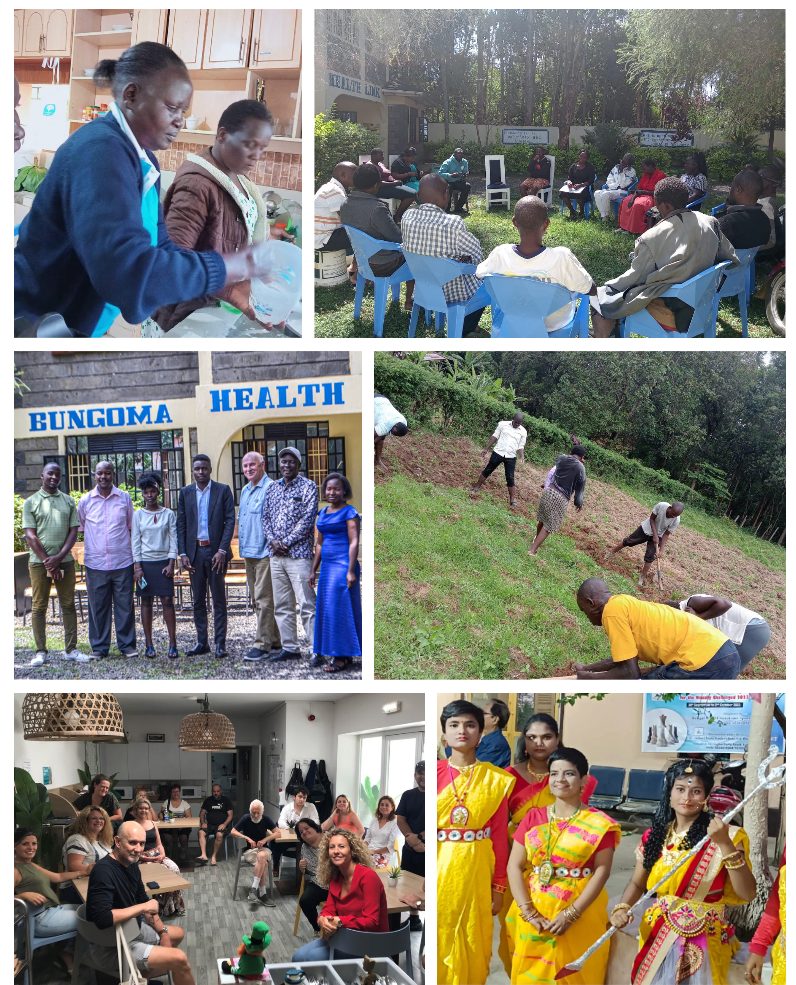
What if powerful medicine for mental health wasn’t found only in a clinic, but in a community that listens, responds, and grows with every member?
Across thirty-three countries, the Clubhouse movement is transforming mental health care. People living with schizophrenia, bipolar disorder, depression, and other conditions are rebuilding lives rooted in purpose and belonging.
“This is a gathering of people who are experts, by experience, by profession, and by life.” — Jeff Aron, co-founder, Global Action 4 Mental Health
At the Community as Cure webinar, voices from Gibraltar, India, Kenya, and beyond shared one consistent finding: recovery takes root in community. The Clubhouse model adapts to each local context, but four elements show up everywhere it works: belonging, identity, agency, and contribution.
This is the Social Practice Approach: seeing people not through the lens of illness, but through their strengths and capacity to contribute. Healing isn’t something we prescribe. It’s something we build together. It’s a philosophy that begins with a single word: no one is called a “patient”; they’re called a “member,” reinforcing an identity beyond diagnosis.
“We call the people who come here ‘members’… and that itself boosts their confidence.” — Sohini Basu Sarkar, Superintendent, SEVAC Mental Healthcare Facility, Kolkata
Clubhouse members in Gibraltar act as hosts, administrators, and retailers. In Kolkata, members have units where they develop their skills and talents. In Bungoma, members work on income-generating projects. Across every location, members are recognized by what they contribute to society rather than their diagnoses.
That contribution is only possible because of choice. Agency comes alive through democratic participation and shared decision-making. People are not passive recipients of care but active architects of the community they help to build.
“It is not obligatory… it is out of choice.” – Caren Sumba, Founder, Bungoma Health Link Forum, Kenya
That choice shows up in the smallest moments. Recovery starts with something as simple as being asked to join in. In Kolkata, the group works to define the day. In Bungoma, they initiate projects that build up their community. And in Gibraltar, they select work that plays to their own strengths and interests. It is easy to dismiss such small instances as commonplace, but in combination, they speak to a bigger message: you matter, you count, you belong, and you have as much to give as you have to receive.
When people are trusted with meaningful work that reflects their strengths, they often discover abilities they never knew they had. Contribution restores dignity, builds confidence, and renews a sense of purpose. In doing so, it challenges the long-held misconception that people living with mental health conditions lack strength or potential, revealing what was there from the beginning.
But contribution alone is not enough, it needs a foundation to stand on. In Gibraltar, the rhythm of daily unit meetings provides structure and connection. In Bungoma, the work-ordered day offers purpose through routine and shared responsibility. Over time, routine becomes a pathway to connection, purpose, and possibility.
As Pernice et al. suggest, the Clubhouse model creates an intentional community where “place” matters both physically and psychologically. Within this environment, people find relief from isolation, meaningful relationships, opportunities to contribute, and the agency that comes from choice, shared decision-making, and reciprocal support.
All of this points to the same truth: community is not simply an intervention; it is the foundation of recovery. When intentionally co-created by people with lived experience and those who work alongside them, it becomes a powerful force for mental health, recovery, and human flourishing.
“The building of a clubhouse… changes our understanding of what it means to be human.” — Jeff Aron
The Community as Cure webinar included the following featured speakers:
Jeff Aron
Global Action 4 Mental Health; Global Play Brigade
Jeff Aron has spent much of his professional life advancing community-based mental health around the world. As Director of External Affairs at Fountain House, he helped lead the organization and Clubhouse International to receive the Conrad N. Hilton Humanitarian Prize and supported a partnership with the World Health Organization to develop global guidelines for community mental health care.
As co-founder of Global Action 4 Mental Health and creator of Community as Cure, he continues connecting leaders worldwide through the belief that community is a pathway to recovery.
Sohini Basu Sarkar
Clinical Psychologist and Superintendent, SEVAC Mental Healthcare Facility; CVAC Clubhouse, Kolkata, India
Sohini Basu Sarkar is a clinical psychologist and Superintendent at SEVAC Mental Healthcare Facility in Kolkata, India. Through her work at the SEVAC (CVAC) Clubhouse, she bridges clinical care, education, and community-based rehabilitation.Her work focuses on psychosocial rehabilitation, helping people build skills, confidence, and meaningful roles in their communities.
Caren Sumba
Bungoma Health Link Forum, Kenya
Caren, Founder and Head of Bungoma Health Link Forum (BHLF) in Kenya, previously served as a public health officer and is currently a PhD student in Global Mental Health at Masinde Muliro University. Her work advances community-based mental health through public health leadership and grassroots economic empowerment.
Emily Adamberry Olivero, MBE
Chairperson, Clubhouse Europe; Founder, Clubhouse Gibraltar
Emily Adamberry Olivero, MBE is Chairperson of Clubhouse Europe and Founder of Clubhouse Gibraltar. A long-standing mental health advocate, she has advanced community-based recovery across Europe and continues to expand the Clubhouse Model as a pathway to dignity, inclusion, and meaningful participation.“Coming to the Clubhouse… is like joining your second family, and in some cases… your first family.”
Dr. Afzal Javed
Former President, World Psychiatric Association; Partners in Care Advisory Board
Dr. Afzal Javed has supported the development of Fountain House initiatives in Lahore, Pakistan, and advocates for “thinking globally and acting locally” by adapting community-based recovery to the unique needs of each community.
Tahilia Rebello, PhD
Partners in Care Advisory Board; One Mind, Chief Scientific Officer
Tahilia Rebello brought a research and systems level perspective to the discussion, drawing on her work with the Advisory Board of Partners in Care. She emphasized that the need for belonging is universal. “There is this human need for community, for belonging, for connection.”
She emphasized that predictable routines, meaningful participation, and opportunities to contribute are psychologically protective, helping people see themselves as more than their diagnosis and supporting lasting recovery across cultures.
Additional Resources
*For readers interested in exploring these ideas further, Francesca M. Pernice et al.’s Community as Therapy: The Theory of Social Practice offers a thoughtful exploration of the role of intentional community in recovery.
*Partners in Care: Fostering Relationships with Clubhouses to Support Recovery From Serious Mental Illness is a collaboration between Fountain House, Magnolia Clubhouse, Wayne State University, the World Psychiatric Association, and Clubhouse International.