
One Mind at Work’s 10th Annual Global Forum Explores Work and Well-Being in the Age of AI
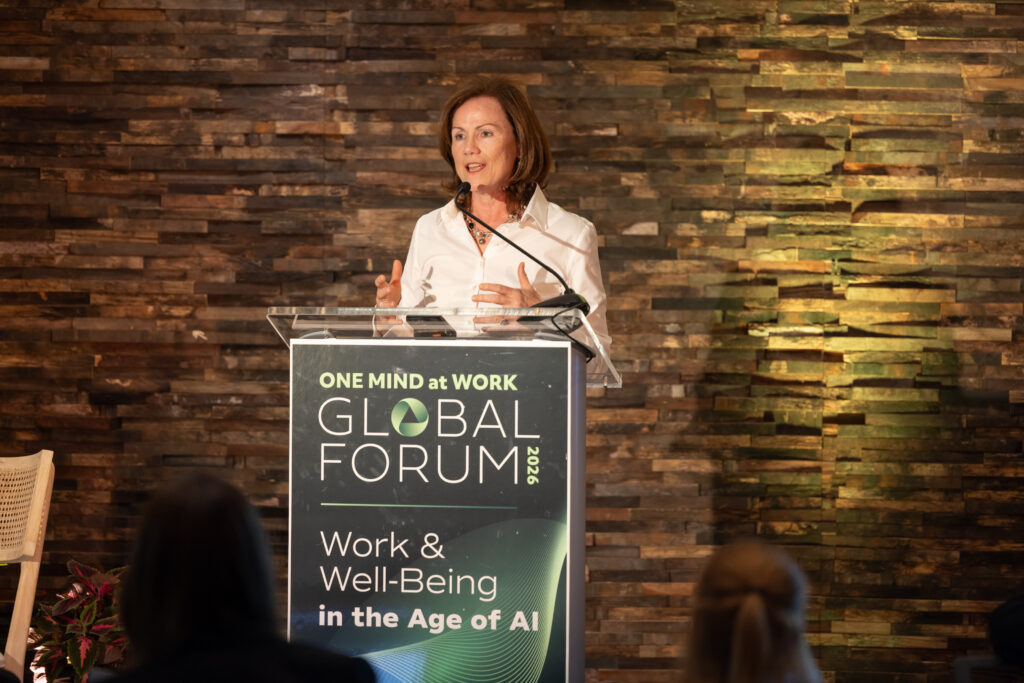
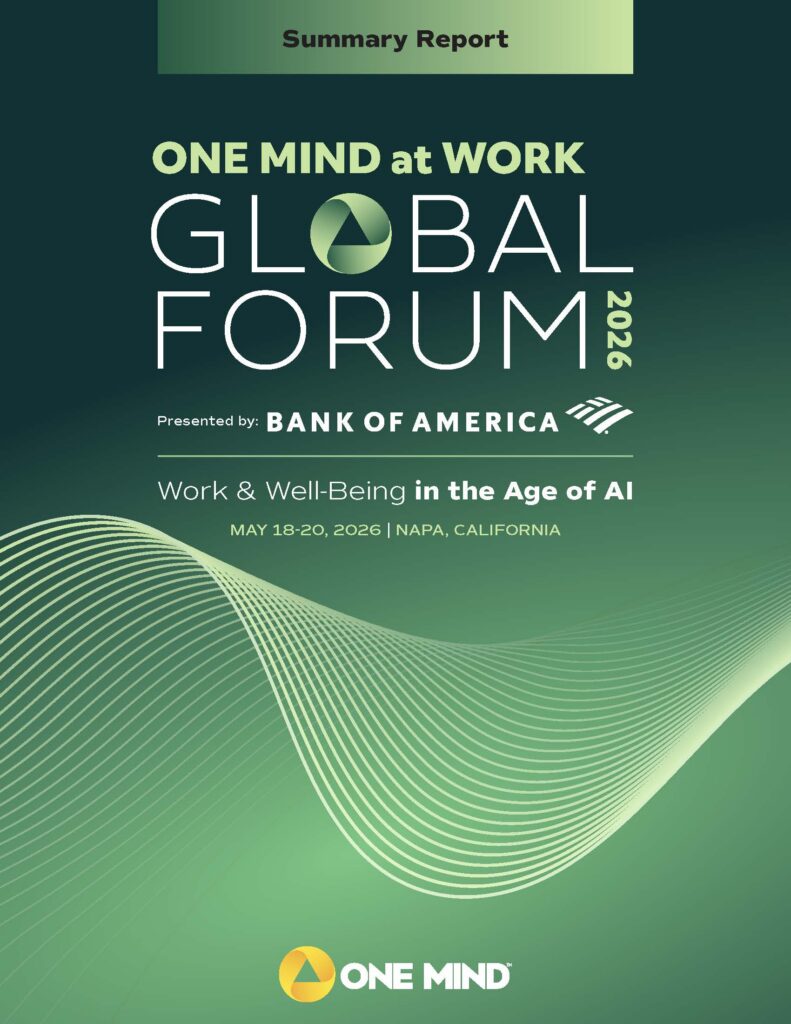
NAPA, CALIF. (May 20, 2026) – One Mind at Work convened its 10th Annual Global Forum in Napa Valley from May 18–20, bringing together global leaders, experts, and employers to explore how rapidly evolving technologies are changing the workplace—and what that means for the people in it. The central message of the forum: as AI reshapes roles, workflows, and organizational structures, innovation and well-being cannot be treated as competing priorities. They have to go hand in hand.
This year’s theme, “Work & Well-Being in the Age of AI,” examined the mental health consequences of a workplace in flux — from the cognitive demands of AI-assisted work to concerns about job security and the need for organizations to implement AI ethically and transparently. The Forum also looked at how AI is changing mental health care itself, expanding access, enabling earlier identification of needs, and supporting more personalized care, all while raising real questions about equity, privacy, and trust.
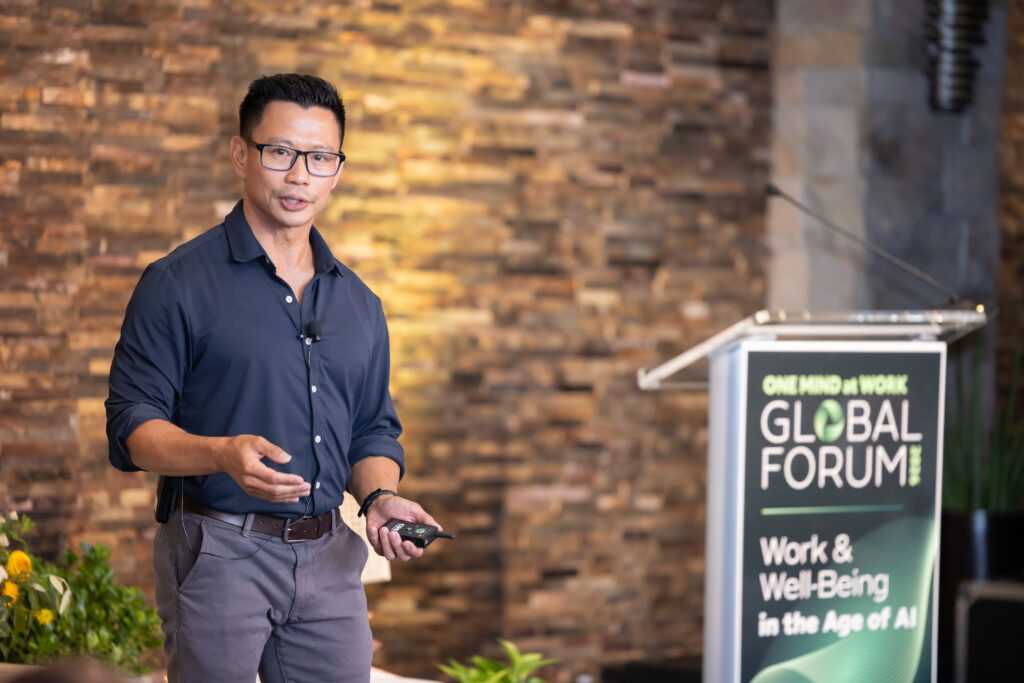
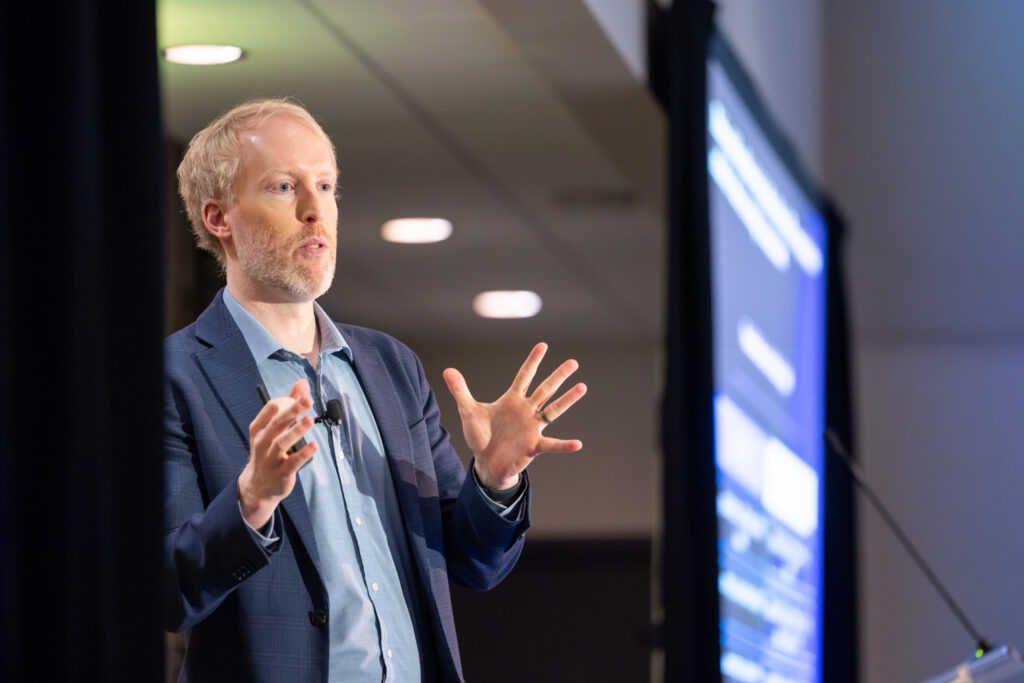
Day One keynote speaker Newton Cheng, MBA, former Director of Health + Performance at Google, challenged leaders to trade polish for presence.
“Real talk begets real talk, but someone has to go first,” said Cheng. “Lead with total honesty instead of a performance. With full presence instead of false certainty.”
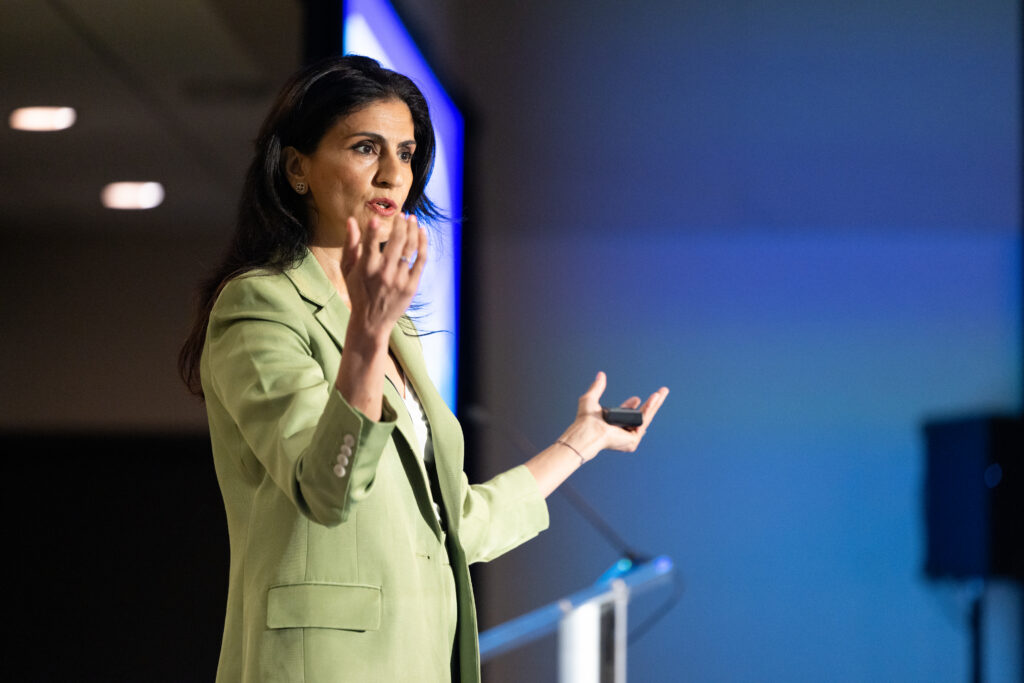
Day Two keynote speaker Dr. Monika Misra, Global Head of Associate Health & Wellbeing at Mars, grounded the conversation in the science of change and stress.
“From an evolutionary perspective, we’re wired to seek predictability, certainty, and safety,” said Dr. Misra. “It’s really about how you shift from managing people to leading, to inspiring, to role modeling. To creating that environment of psychological safety, so that people can be vulnerable and get the right level of support that they need.”
Themes Throughout the Event
Across two days of keynotes, panels, and workshops, six themes emerged for employers navigating well-being in an AI-enabled world:
- Mental Health Is a Business Imperative and Performance Issue: Speakers connected brain health and emotional well-being directly to organizational performance and innovation, with the “Brain Capital” framework offering leaders a way to engage with mental health in the language of productivity and economic value.
- Workplace Well-Being Is Directly Connected to Work Design: Even the best well-being programs can’t succeed when employees are operating under constant pressure and always-on cultures. Organizations need to examine workflows, expectations, and policies — not just individual-level solutions.
- Navigating Change Requires More Human Conversation, Not Less: Trust and psychological safety were named again and again as the foundation for navigating uncertainty. People don’t need leaders with all the answers — they need transparency, presence, and a willingness to talk.
- The Human Side of Change Is Not Optional; It Is Strategic: Stress reactions to change are normal physiology, not personal weakness. Leaders were challenged to treat anxiety and resistance as information worth listening to, starting with support for line managers absorbing pressure from every direction.
- Diverse Thinking and Lived Experience Are Competitive Advantages: Organizations that draw on neurodistinct talent and the lived experience of mental illness build more resilient teams. Realizing that advantage requires psychological safety, flexible ways of working, and leaders who recognize the strengths employees bring.
- Emerging Technologies Demand an Intentional Kind of Leadership: Panelists were not anti-technology, but they were candid about the risks of moving fast without human-centered guardrails — and about keeping empathy and human connection at the center of an increasingly automated workplace.
AI, Ethics, and the Future of Mental Health Care
A recurring thread throughout the Forum was the responsible use of AI in mental health contexts. In a session on the CEO Alliance for Mental Health, featuring Rebecca O. Bagley of The Kennedy Forum and Dr. Kathleen M. Pike, CEO of One Mind, panelists made the case that legal compliance isn’t enough — AI tools used in mental health settings should be held to higher standards of transparency, safety, and stewardship, with health equity built in from the start rather than added later.
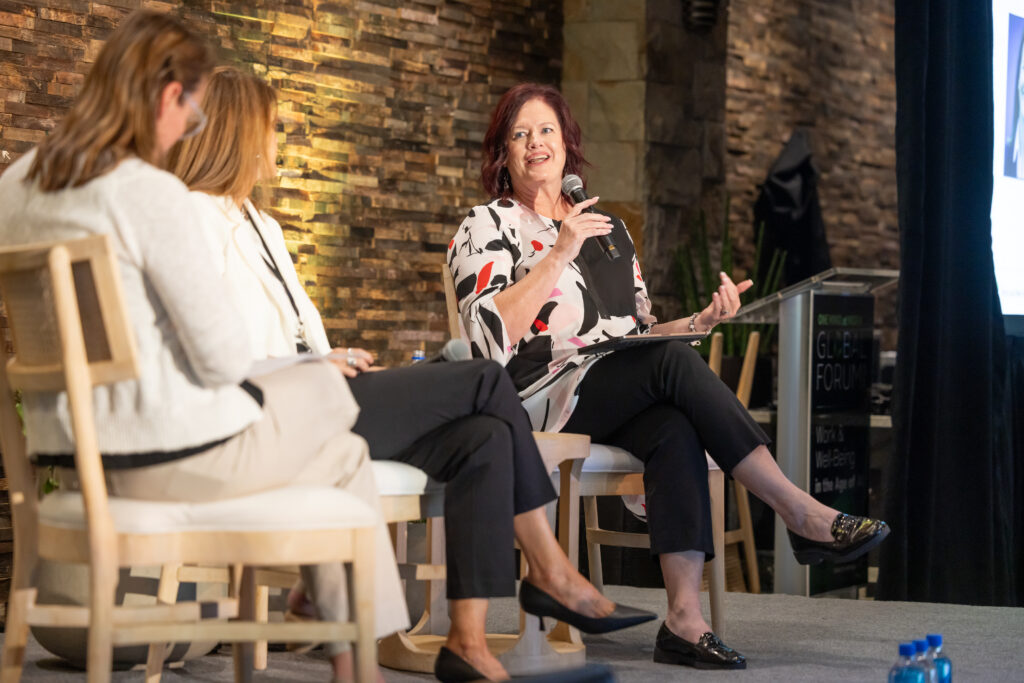
That principle carried into a panel on HR in the Age of AI, where Sondra Davis, CHRO of North Mississippi Health Services, posed the question at the heart of the Forum:
“Within the AI revolution, where will human potential and human values shine? How can and will AI amplify the human element of work?”
Dr. Harris Eyre, Executive Director of the Global Brain Economy Initiative, offered a similar challenge in his presentation on brain capital:
“What is the key to making humans unique from AI? … What are the unique human strengths, the human advantage? That’s what we need to focus on in the future of work.”
Workshops and Deep Dives
The program featured keynotes, panels, and interactive workshops on the structural and human dimensions of AI-era well-being. Notable sessions included:
“Strengths AI Cannot Match: Cultivating the Neurodistinction of Your Workforce with Lived Mental Illness Experience” – Featuring Brandon Staglin, Co-Founder & Chief Advocacy and Engagement Officer at One Mind, alongside members of the One Mind Lived Experience Council, this session introduced One Mind at Work’s Flourish@Work initiative and made the case that organizations benefit most when they focus on what employees with lived experience bring, not their limitations.
“Hype, Hope, and Hard Questions: What Employers Need to Know About AI-Powered Mental Health Solutions” – Moderated by Dr. David W. Ballard, Vice President of One Mind at Work, and featuring Vaile Wright of the American Psychological Association and Neil Parikh, Co-Founder of Slingshot AI, this panel examined how employers can evaluate the clinical effectiveness, ethics, and data privacy of AI-driven mental health tools.
“Avoiding the Hive Mind: How Diverse Thinking and Lived Experience Fuel Innovation and Support Workforce Well-Being” – Moderated by Brandon Staglin and featuring leaders from Kaiser Permanente and Deutsche Bank, this panel explored how building inclusive teams around neurodiverse individuals and different ways of processing and communicating strengthens innovation and engagement.
“Navigating the Human Side of Change” – Building on her keynote, Dr. Monika Misra led an interactive workshop helping participants understand emotional responses to change and develop skills for trust-building and resilience during transition.
“From Intention to Impact: Building Your Organization’s Mental Health Strategy” – Led by Dr. Tahilia J. Rebello, Chief Scientific Officer at One Mind, this session used an 8-stage framework to help attendees assess where their organization stands and break strategy development into actionable next steps.
The Forum also featured Work in Progress, an interactive music composition experience. Over the course of the three days, more than a hundred attendees contributed reflections on what they were carrying, what had shifted, and what they were taking home — language that was then shaped, with the help of AI, into an original musical composition unique to this year’s community.
The Salus Award
The Salus Award takes its name from the Staglin Family wine label, which honors Salus, the Roman goddess of well-being. Each year at the Global Forum, One Mind at Work presents the Salus Award to one individual and one organization in recognition of a remarkable commitment to advancing the pillars of the One Mind at Work Charter.
The 2026 Salus Award for Workplace Mental Health was presented to Mars.
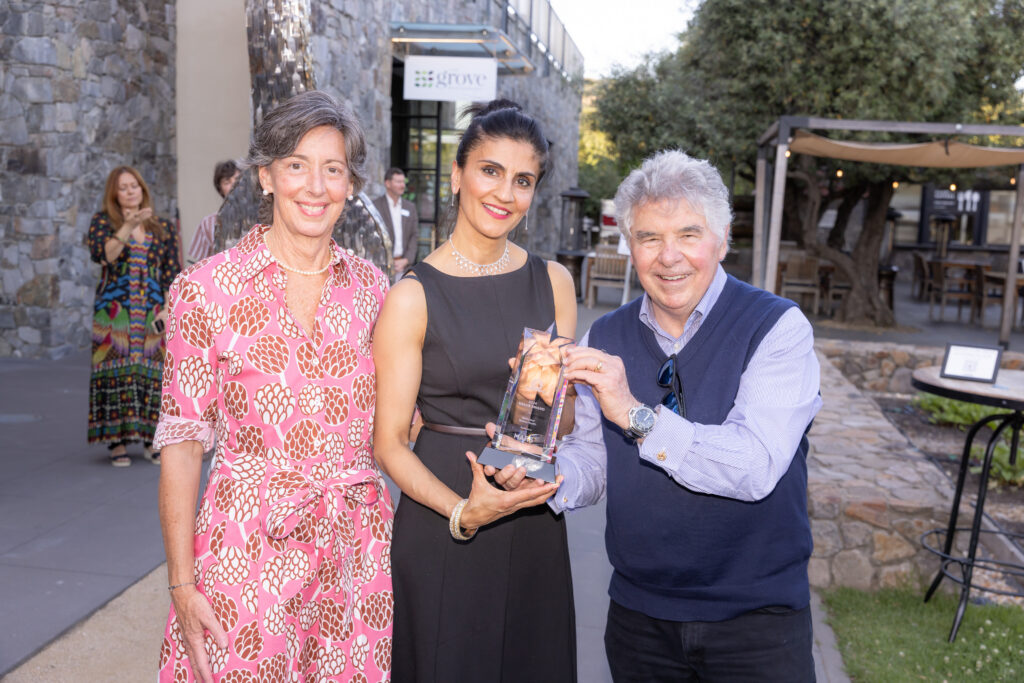
The 2026 Salus Award for Individual Voices in Workplace Mental Health was presented to Anne Oxrider, Bank of America.
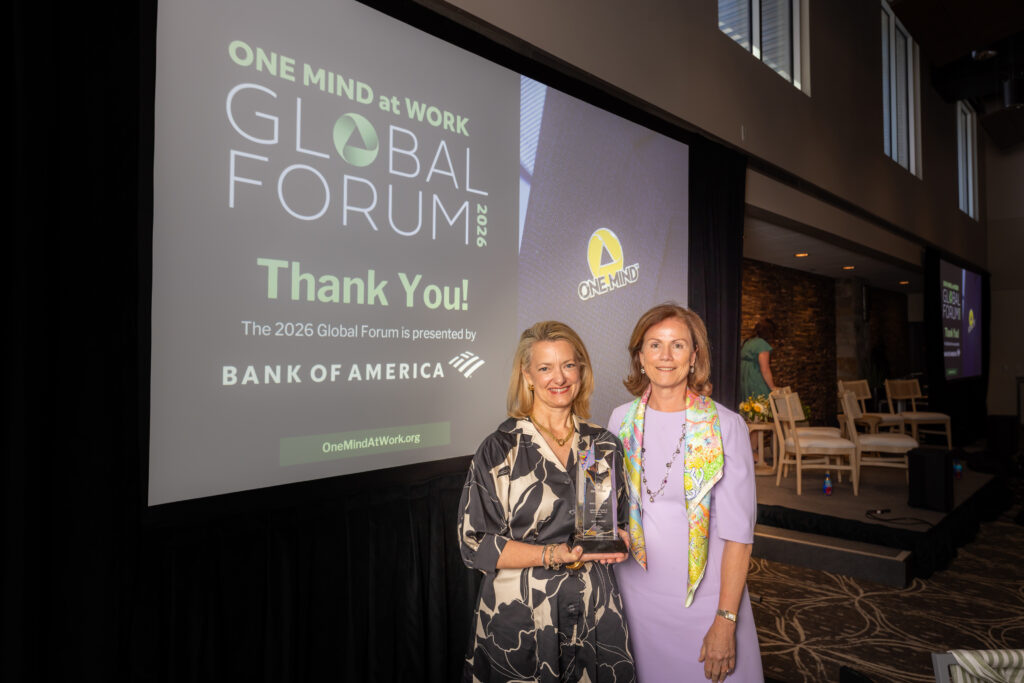
This year, One Mind at Work also presented its first-ever Career Impact Award in Workplace Mental Health to Jeffery Tan, Jardine Cycle & Carriage, recognizing his retirement and a lifetime commitment to workplace mental health and well-being.
Key Takeaways
Closing out the 10th Annual One Mind at Work Global Forum, attendees left with a set of practical commitments to carry back to their organizations:
- Practice the pause — starting with yourself, before extending it to your team
- Reframe mental health as a performance topic to engage leaders who might otherwise disengage
- Be intentional about what AI can and cannot replace in mental health care
- Build systems that meet people at the moment of need, not just at a scheduled appointment
- Know your circles of control, and be honest about where you can create change
- Stop treating busyness as a badge of honor — reestablish meaning and purpose at work
- Model the behaviors you’re asking others to adopt
About One Mind
One Mind is a leading global nonprofit dedicated to improving mental health outcomes for individuals, families, and society. Guided by science and lived experience, One Mind brings more than 30 years of leadership to closing critical gaps between discovery and real-world impact, advancing solutions that improve prevention, diagnosis, treatment, and well-being at scale. Through a portfolio of integrated programs, One Mind catalyzes breakthrough research, accelerates evidence-driven innovation, transforms workplace mental health, and elevates lived experience to inform more effective solutions. With science as our foundation and people at the center of everything we do, One Mind is shaping a more effective, inclusive, and hopeful mental health ecosystem.
About One Mind at Work
One Mind at Work is leading a global movement to transform workforce mental health and well-being. We work with leaders to translate cutting-edge science into practical, evidence-based strategies that strengthen cultures and systems so people and organizations can flourish together. Through a global membership community, One Mind at Work provides expertise, education, measurement, and peer connection to help organizations elevate their mental health policies and practices. This work is powered by the Mental Health at Work Index™, a first-of-its-kind assessment of organizational-level mental health initiatives that helps employers assess program maturity, benchmark progress, and drive measurable improvements in workforce well-being and business performance.
Learn more