
Watch the Inspiring Talks from the 2026 Science & Innovation Symposium at the 32nd One Mind Music Festival
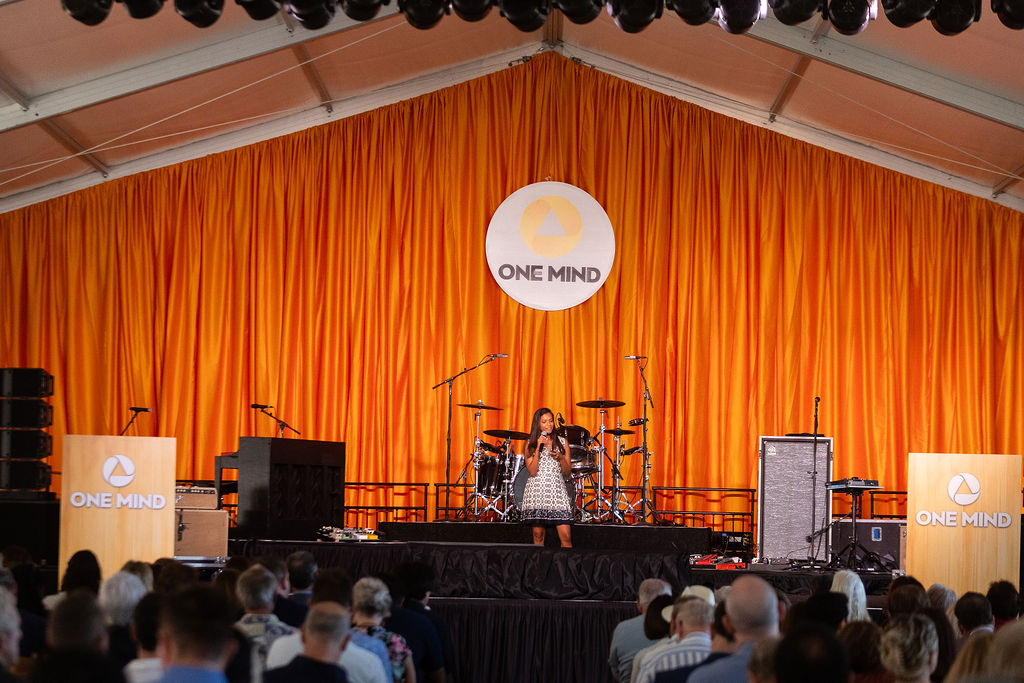
On September 19, 2026, the 32nd One Mind Music Festival, presented by Bank of America and Bristol Myers Squibb, welcomed more than 500 attendees to the beautiful Staglin Family Vineyard. Together, supporters helped generate over $3.6 million to advance mental health research and brain science initiatives. The day kicked off with the Science & Innovation Symposium, a dynamic forum that highlights new frontiers in the diagnosis, prevention, and treatment of mental health conditions.
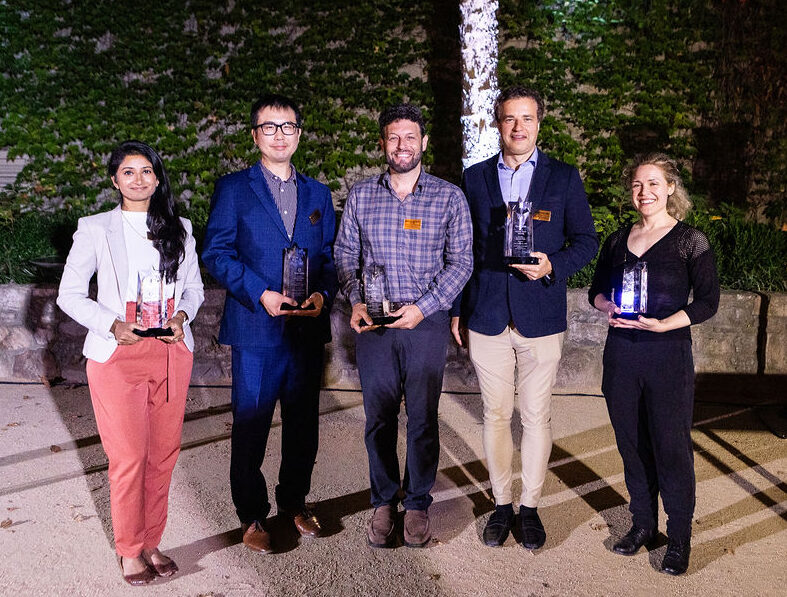
This year’s symposium featured an incredible lineup of experts and innovators, including: a keynote from Co-Founders of COMPASS Pathways, Dr. Ekaterina Malievskaia and Lars Wilde, presentations by One Mind Accelerator founders from Monument Therapeutics and Radicle Science, the 2026 One Mind Rising Star Award recipients (pictured below), and a fireside chat moderated by One Mind CEO Dr. Kathy Pike with Dr. Matthew White, MD of Sutter Health, Brandon Staglin of One Mind Lived Experience, and David Ballard of One Mind at Work, all sharing transformative research and insights.
Don’t just watch the progress, be part of it. Explore these presentations and connect with the movement transforming mental health. Subscribe to One Mind’s YouTube channel to catch all the newest content, events, and updates.
The Molecule Nobody Wanted: Transforming Psilocybin into a Medicine to Advance Mental Health (2026 Keynote)
When COMPASS Pathways co-founders Ekaterina “Katya” Malievskaia and Lars Wilde took the stage at the 32nd Annual One Mind Music Festival, they told a story of courage in science that began with personal experience. Katya, a physician, watched her teenage son get worse with every treatment for OCD and treatment-resistant depression. Lars found relief from his own severe anxiety and depression in a single psilocybin session.
Together they set out to take psilocybin, a Schedule I substance drug developers had shelved for 50 years, through the most rigorous path to approval possible. They went to regulators first and ran large randomized trials with leading psychiatrists at 125 sites in 13 countries, enrolling more than 1,300 participants. That work produced a phase 2b study published in the New England Journal of Medicine, two phase 3 trials, and new 12-month data showing lasting benefits for treatment-resistant depression after just two to three doses. Lars said FDA approval could come by the end of this year. The founders gave much of the credit to the researchers, regulators, investors, and especially the trial participants who said yes without knowing whether they’d receive the drug or a placebo.
They closed with a call to action: the molecule’s story is nearly finished, but building the system to deliver it is just beginning. “The next chapter is not only ours,” they said. “It is yours.”
Research Presentations from the 2026 One Mind Rising Star Awards
With his One Mind funded research project, Toward Personalized, Mechanistic Diagnosis and Treatment of Anhedonia through Computational Psychiatry, 2026 One Mind Ben Langford and Nicholas Hall Rising Star Awardee Kiyohito Iigaya, PhD is uncovering the mechanisms behind the loss of pleasure in depression.
Anhedonia, the inability to experience pleasure, is a debilitating symptom in major depression and schizophrenia. For many individuals, the core problem lies not in experiencing rewards themselves but in anticipating them. People fail to experience pleasure while waiting for rewards, even though eventual consumption is enjoyable. This “anticipatory anhedonia” is strongly linked to treatment resistance, disability, and suicide risk. Yet current approaches cannot explain why it occurs or how to treat it effectively. This project reframes a core aspect of anhedonia as a failure in the dynamic construction of anticipation. This internal process unfolds over time and can be quantified, modeled, and therapeutically targeted. Rather than relying on standard measures that capture reward responses over only a few seconds, we computationally model and directly measure how anticipation evolves across brain circuits over extended timescales of up to 40 seconds.
2026 One Mind Accelerator Talks
Dr. Jenny Barnett is the CEO & Co-Founder of Monument Therapeutics, a 2026 One Mind Accelerator Company. Monument Tx is a neuroscience-focused drug development company using digital biomarkers to develop more targeted treatments for psychiatric and neurological disorders. Lead program MT1988 is currently in a large patient study in clinical high risk for psychosis individuals to assess its potential to improve cognitive impairment associated with schizophrenia and validate its predictive digital biomarker.
Dr. Jeff Chen is the CEO & Co-Founder of Radicle Science, a 2026 One Mind Accelerator Company. Radicle Science is a healthtech public benefit corporation on a mission to transform the $1T global wellness industry by enabling rigorous science at unprecedented speed, scale, and precision. By fusing AI, consumer science, and massively scalable real world clinical trials, Radicle is enabling a new generation of proven, precision nonprescription treatments–accessible to all.
Innovations for the Healing Journey: From Care to Recovery to Workplace Thriving
In this session, One Mind CEO Dr. Kathy Pike leads a discussion with Dr. Matthew White, Chair of the Behavioral Health Service Line at Sutter Health, along with two members of the One Mind leadership team: Brandon Staglin, Co-Founder and Chief Advocacy and Engagement Officer, and Dr. David Ballard, Vice President of One Mind at Work. Together they explore what courage looks like in real-world work settings when it comes to mental health, and why it matters.
Thank you to everyone who came out for the 32nd One Mind Music Festival and our 2026 Science & Innovation Symposium. Your support enriches our research community, and we look forward to seeing you at next year’s event on Saturday, September 11, 2027.
Until then, we invite you to join us in New York for our 3rd annual Apollo & Psyche celebration. Inspired by Apollo, the god of music, dance, and healing, and Psyche, the goddess of the mind and soul, Apollo & Psyche honors the timeless connection between healing and the arts. The annual event is held at Jazz at Lincoln Center, in New York City, and brings together world-class performers and passionate advocates to celebrate resilience, renewal, and the human spirit, while uniting a community of friends and partners who are passionate about mental health.