
An Unplanned Experiment: How Lived Experience Reshaped My Science
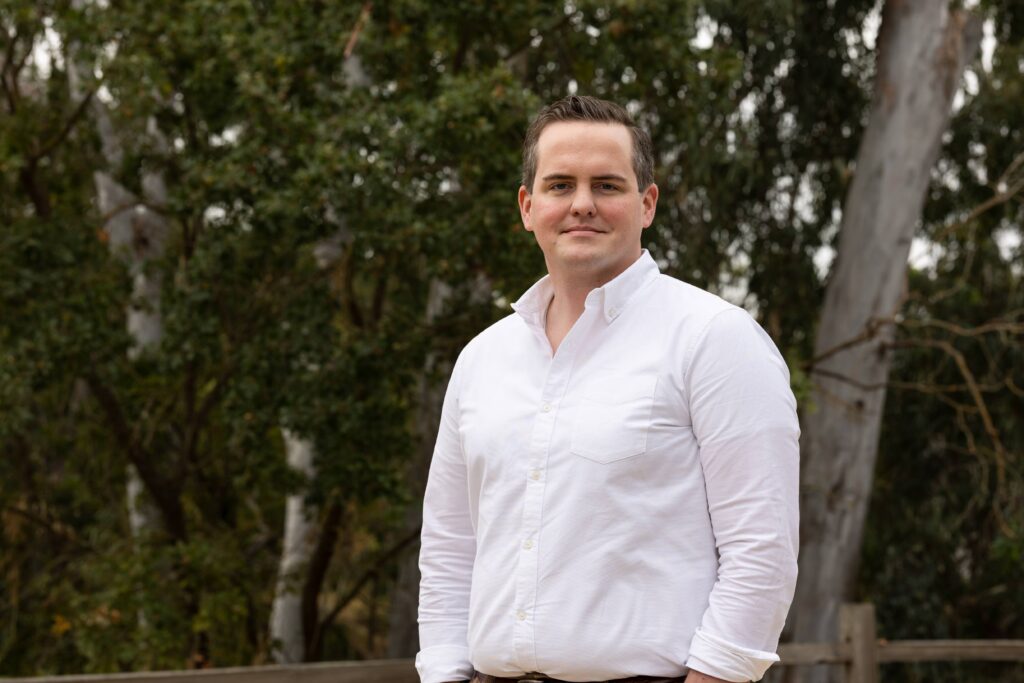
By Dr. Edward Twomey
My head hit ice and everything changed.
In January 2019, I made the choice not to wear a helmet while I was snowboarding. I thought I was fine when the accident happened, but little by little I deteriorated. Over the next few months, I developed severe anxiety, had frequent migraines, and eventually grew physically weak; opening doors was more of a challenge, and I had to really try to walk in a straight line.
Fast forward to April. My body got to a point where I knew something was wrong. I insisted on having an MRI of my head, and a few hours later I received a frantic call from an emergency room in Boston, MA – my brain was bleeding, and I needed to come to the hospital right away.
During this time, I was pursuing postdoctoral training in Boston, where I was working in a lab studying how our cells recycle proteins (protein homeostasis). This is a fundamental process for all forms of life, and disrupting protein recycling can lead to all sorts of diseases – from cancer to neurodegeneration, even aging. We had recently submitted a major work in the field, where we unlocked a key step in how this process worked. I was pursuing experiments to solidify our findings. Yet my work, and my life, came to a rapid, screeching halt after that call.
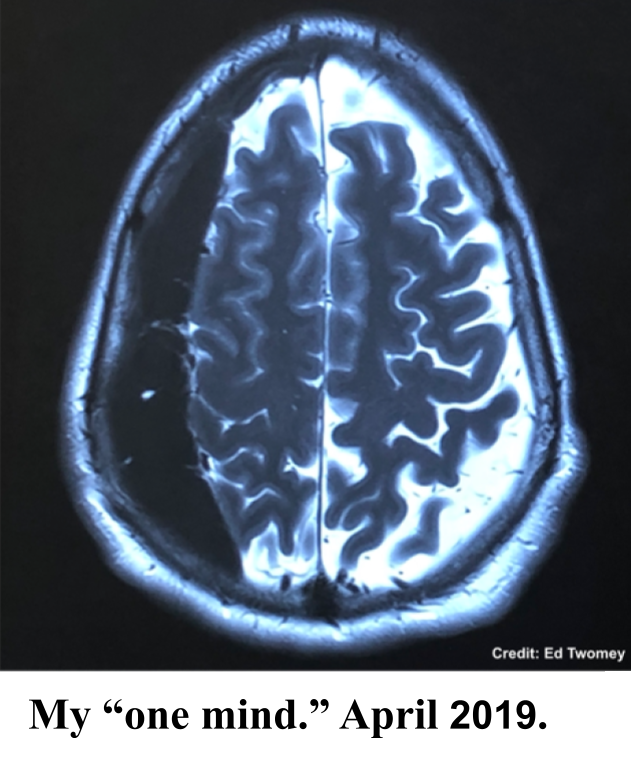
After arriving in the ER, I was shown an image of my brain. One side of my brain was covered in blood. I had a subdural hematoma that was slowly developing after my snowboarding injury, that had welled up so much my brain was in trouble. It had reached a breaking point. I needed an emergency craniotomy.
The surgery went well, but there was so much fluid that compressed my brain I would need months for it to re-expand, and months to recover. Alone with my thoughts, I developed a debilitating anxiety over my mind and my health, questioning every feeling I had, and whether my brain was bleeding again. It was crippling. I began a journey marked by severe anxiety and panic attacks, where I would have to carefully plan my activities and wonder if this was my future.
But I was encouraged by my care team to be patient with myself and my recovery – and to seek treatment for my anxiety and panic attacks. My journey – from injury through recovery – changed how I thought about my science. I knew that I wanted to start a lab where I studied protein homeostasis – how our cells make proteins, fold them, repair them, and recycle them, but this changed. I wanted to better understand what was going on in my brain and developed a burning desire to study what was going on with the molecular machines that make our brains tick – because ever since my accident, I felt that mine were not ticking properly.
Prior to moving to Boston, I pursued my Ph.D. studies in New York City, where I studied neurotransmitter receptors – the proteins in the brain that enable neurons, the cellular foundations of our brains, to communicate with one another. When I was sitting in the hospital during my recovery, I could not help but wonder what was going on with these receptors with the torrential amount of inflammation that was likely ripping through my brain.
I used this as a calling, where I had to understand how changes in temperature can alter the function of our neurotransmitter receptors. Despite this being a fundamental question in biology, it was one that was nearly completely unanswered. I would have to answer it myself.
This question was a launching point for my lab and has unlocked new areas of neuroscience. We discovered that healthy and unhealthy brain temperatures have dramatic effects on neurotransmitter receptor function and discovered the mechanism for how our brain’s major neurotransmitter, glutamate, works. We then built upon these findings by discovering how temperature is a key factor in unlocking the function of a previously mysterious class of neurotransmitter receptors called delta receptors. It turns out that delta receptors are much like the rest of our neurotransmitter receptors but require temperature to function, which is a key reason why delta receptor functioning has been largely a mystery until now. And now that we know how they function on the molecular level, One Mind is funding research to understand how neuropsychiatric-related mutations in delta receptors dysregulate their normal function via the 2025 One Mind Bristol Myers Squibb Rising Star Award. The research will provide critical new foundations for drug development.
My journey, and my lived experience, helped me think in a novel way. My lived experience changed how I think and changed how I do science. While I am not grateful for my trauma, it is important to acknowledge how it reshaped me, and strengthened me. Experience can be heavy but also clarifying.
An invitation to all:
This lived experience is mine, but many of us, our friends, and colleagues have their own lived experiences, and it strengthens them too. It can sharpen your questions. It can deepen your empathy. It can change what you prioritize, and how you lead, and what you decide is worth doing when time and energy are limited.
For nearly half of my life, I have been a scientist. But an unexpected “experiment” in 2019 reshaped me and brought me back to the inner workings of the brain with a new kind of attention. My science is stronger for it. And in a strange way, my outlook is too: not because hardship is good, but because it reminded me that meaning can be built from what we survive.
If One Mind’s work is about anything, it is this: lived experience is not an aside. It is a form of knowledge. And when we make room for it – openly, responsibly, without forcing anyone to disclose before they’re ready – it can shape better science, better systems, and better lives.