
The Kindest Voice in the Room Should Be Your Own
What Mental Illness Taught Me About Leadership, Self-Compassion, and the Radical Power of Acceptance
by Tracie Ibrahim
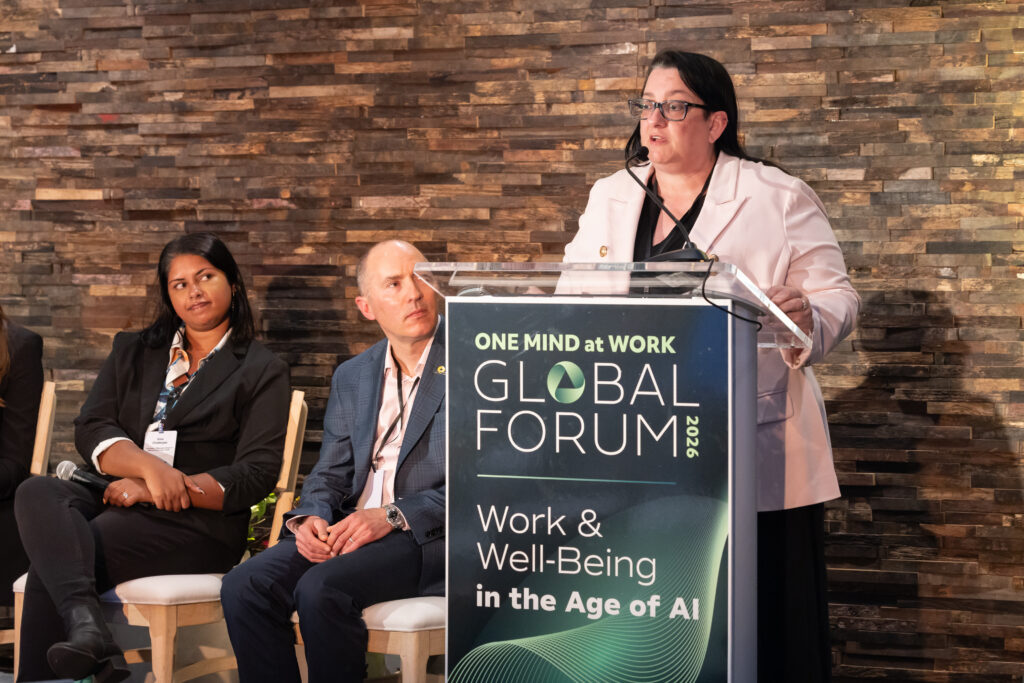
If you met me at work, you’d probably describe me as composed, strategic, optimistic, and focused. I’m a mental health executive entrusted with helping improve systems of care, supporting clinicians, making difficult decisions, and advocating for people living with mental illness.
If you met me inside my own mind on a difficult day, however, you’d discover a very different workplace.
One where an overzealous internal auditor questions every decision.
One where an alarm system frequently goes off despite there being no fire.
One where unwanted intrusive thoughts wander through uninvited like they own the place.
And one where depression sometimes whispers that none of my accomplishments matter.
Welcome to the fascinating—and occasionally exhausting—experience of living with serious mental illness.
The remarkable thing isn’t that these thoughts appear. The remarkable thing is that they don’t have to run the meeting.
My Brain Is Creative… Sometimes Too Creative
Living with OCD, depression, trauma, or anxiety often means your brain has an overactive imagination with absolutely terrible judgment.
It creates stories.
“What if something terrible happens?”
“What if you made a horrible mistake?”
“What if everyone realizes you’re a fraud?”
My brain deserves an Academy Award for Best Original Screenplay.
The problem is that, for years, I treated every one of these mental productions like breaking news.
I analyzed them.
Argued with them.
Tried to eliminate them.
Spoiler alert: that strategy works about as well as trying to smooth ocean waves with a rake.
The Day I Stopped Fighting My Mind
One of the greatest gifts I’ve received came through learning Radical Acceptance.
At first, I hated the phrase. It sounded suspiciously like giving up. It isn’t.
Acceptance is not approval.
Acceptance is not resignation.
Acceptance is acknowledging reality instead of exhausting yourself arguing with it.
It sounds like this:
“My brain is producing intrusive thoughts today.”
instead of
“Why am I like this? I have to make these stop.”
The first statement creates room.
The second creates suffering.
Pain is often unavoidable.
Fighting reality is optional.
Your Brain Is Not Your Character Reference
One of the cruelest lies mental illness tells us is this:
“If you think it, it must say something about who you are.”
No. Thoughts are mental events—not moral verdicts.
Clouds pass through the sky.
Songs get stuck in your head.
Random thoughts pass through your mind.
None of these define your identity.
I’ve learned that I don’t need to attend every meeting my brain schedules.
Sometimes the healthiest response is simply:
“Interesting thought.” Then I return to the life I actually want to live.
Self-Compassion Is Not Self-Indulgence
Many high achievers secretly believe self-compassion is the enemy of excellence. I certainly did. I thought being hard on myself made me successful. In reality, it mostly made me exhausted.
Imagine speaking to your best friend the way many of us speak to ourselves.
“You should have done better.”
“What’s wrong with you?”
“You always mess things up.”
You’d lose that friendship pretty quickly. Yet many of us allow that voice unlimited access to our own minds. Self-compassion doesn’t lower standards. It changes the coach. Great coaches challenge you and certainly don’t shame you.
Research consistently shows that people who practice self-compassion are often more resilient, more motivated after setbacks, and less likely to become trapped in cycles of anxiety and perfectionism.
Turns out kindness isn’t weakness. It’s fuel.
Leadership Begins With the Way We Lead Ourselves
As someone who leads in behavioral healthcare, I’ve realized something important. People don’t need leaders who never struggle. They need leaders who know how to struggle well.
There’s enormous strength in saying:
“I have difficult days.”
“I still practice the skills I encourage others to use.”
“I don’t have perfect mental health. I have practiced mental health.”
There’s a difference.
Recovery isn’t a destination where difficult thoughts magically disappear. Recovery is becoming increasingly skilled at responding to them in a way that is values-aligned.
My Daily Mental Fitness Routine
No magic. No secret formula. Just consistent practices that gently steer me back toward the life I value.
When my brain starts telling dramatic stories, I try to:
- Notice the thought instead of becoming the thought.
- Acknowledge what’s happening: “This feels uncomfortable”
- Practice Radical Acceptance by acknowledging reality without arguing with it.
- Speak to myself the way I’d speak to someone I deeply care about.
- Take the next meaningful action, even if discomfort comes along for the ride.
- Remember that feelings are visitors, not permanent residents.
Some days this works beautifully. Some days it feels messy. Both count.
Progress Is Quiet
We often imagine recovery as fireworks.
More often, it’s choosing not to engage with an intrusive thought for the hundredth time.
It’s getting out of bed when depression insists you stay.
It’s laughing with your family while anxiety rides quietly in the passenger seat.
It’s showing up for your team despite your trauma reactions taking over your nervous system.
These victories rarely make headlines. They build lives.
The Gift We Can Give Ourselves
If there’s one lesson living with serious mental illness has taught me, it’s this:
The voice that follows you everywhere should not be your harshest critic.
It should become your safest place.
Your mind may continue producing unwanted thoughts.
Your emotions may continue fluctuating.
Life will continue being gloriously imperfect.
And still—
You can lead.
You can love.
You can contribute.
You can laugh.
You can heal.
Not because you’ve eliminated every difficult thought. But because you’ve stopped requiring perfect mental health before allowing yourself to fully live.
Perhaps the greatest act of courage isn’t silencing your inner critic.
Perhaps it’s answering it with compassion and kindness – every single time.
Because in the end, the most important relationship you’ll ever have isn’t with your career, your accomplishments, or even your diagnosis.
It’s with yourself.
Be kind to the person you’ll spend your entire life becoming.