
What Leaders Need to Understand About Serious Mental Illness in the Workplace
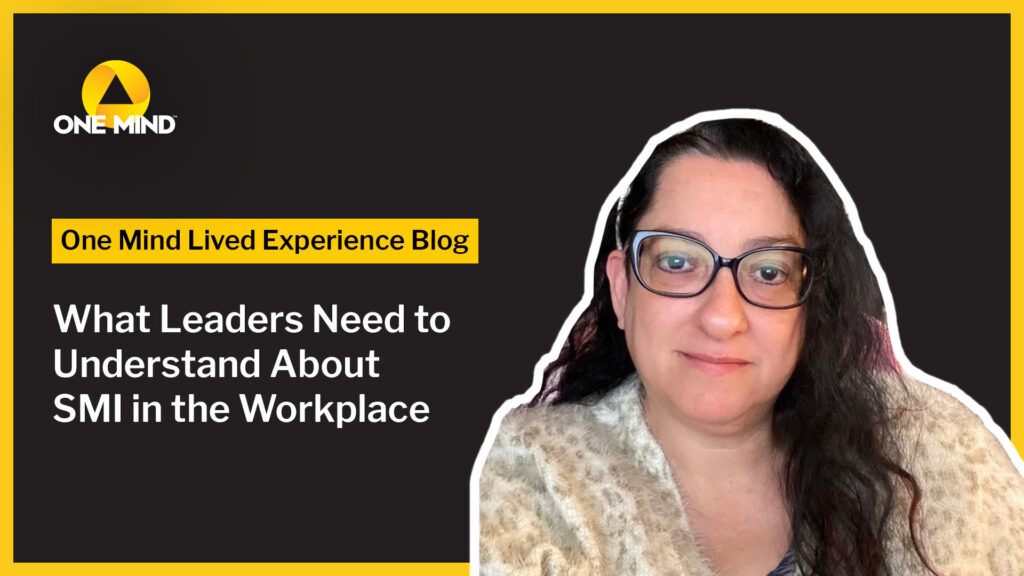
By Tracie Ibrahim
We don’t leave our mental health at home when we clock in to work.
For decades, workplace culture has operated on an implicit and often unspoken rule: if you are struggling, leave it at home. Show up polished. Perform. Produce. Persist. But mental health conditions do not disappear when we badge into an office or log onto a virtual platform. They move with us—into meetings, performance reviews, deadlines, leadership decisions, and team dynamics.
I know this not only as a mental health executive and licensed therapist, but as someone who has lived with serious mental illness since early childhood.
For much of my childhood and early adulthood, survival felt like a full-time job.
The Invisible Labor of Masking
One of the least discussed workplace burdens for people with mental health conditions is masking—the exhausting, invisible effort to conceal symptoms in order to appear “normal,” stable, and professionally “acceptable”.
Masking can mean sitting through a meeting while disturbing intrusive OCD thoughts and images loop relentlessly in the background. It can mean delivering a polished presentation while privately managing depressive numbness so heavy it feels physically crushing. It can mean regulating trauma responses in real time when a raised voice or sudden shift in tone activates the nervous system. It can mean declining lunch invitations from coworkers because eating in front of colleagues during an eating disorder relapse feels unbearable.
Masking is cognitive labor. It consumes bandwidth. It distorts self-perception. And over time, it is profoundly depleting.
For years, I mastered masking because I believed my professional survival depended on it. When your history includes multiple psychiatric hospitalizations and a long trail of misdiagnoses, you learn early that honest disclosure of symptoms can be dangerous. You internalize the message that serious mental health symptoms must be hidden at all costs.
But the cost of constant concealment is steep. Chronic masking increases burnout, erodes authenticity, and reinforces stigma. It sends a silent signal to others who are struggling: do not speak.
Workplaces rarely see this hidden effort. They measure output, not internal strain.
Accurate Diagnosis, Evidence-Based Treatment, and a Career Turning Point
At age thirty, after finally receiving accurate diagnoses and engaging in evidence-based treatment, my trajectory changed. Stability did not mean the absence of serious mental illness. It meant sustained engagement in recovery. It meant building a life around treatment adherence, self-awareness, and skillful management.
For the past twenty-one years, I have lived with full functional stability. I sustained professional leadership roles. I served as a therapist treating a multitude of SMIs. I built and led initiatives that expanded access to meaningful mental health care.
“Successful management,” for me, means remaining actively engaged in treatment while leading, collaborating, and contributing at a high level—without abandoning my lived experience identity.
My professional path spans 34 years across the continuum of care: psychiatric technician, residential caregiver, supervisor, director, executive director, and now Chief Compliance Officer at NOCD/Noto, the largest specialty tele-mental health provider for specialized mental health treatment in the world. I joined in its early stages and helped scale it into a global platform delivering evidence-based care across all 50 United States and internationally.
Scaling responsibly requires more than operational expertise. It requires a workplace culture that understands mental health from the inside.
Designing Workplaces Through a Lived Experience Lens
My leadership philosophy is inseparable from my lived experience. I pursued executive authority because I repeatedly observed how often decision-makers lacked insight into frontline realities—both clinical and human.
What changes when someone with lived experience with SMI sits in senior leadership?
Psychological Safety Becomes Structural
When you have spent years masking symptoms, you understand how unsafe environments compound suffering. In the workplaces I help shape, psychological safety is not framed as a soft value—it is a structural imperative.
This includes:
- Clear non-retaliation policies.
- Transparent communication during organizational changes.
- Training managers to respond ethically and compassionately to disclosures, coming from a strengths-based/value-added approach to SMIs.
- Modeling appropriate, boundaried vulnerability at the leadership level.
- Setting up departments to recognize and honor each individual staff member as a unique entity with individualized needs and supports that allow them to flourish, utilizing their unique talents and experience as people with SMI, and celebrate the value they bring to the table.
Psychological safety does not require employees to disclose diagnoses. It ensures they will not be penalized if they seek support.
Growth Is Anchored in Clinical Integrity
In healthcare, rapid scaling can tempt organizations to prioritize expansion over rigor. My lived experience reminds me that behind every metric is a person in distress.
At NOCD/Noto, I oversee enterprise-wide compliance and risk management, partnering with clinical leadership to ensure evidence-based standards are implemented at scale. Compliance is not bureaucracy for its own sake—it is protection. It safeguards patients, clinicians, support staff, and the integrity of care.
Innovation should never outrun ethics.
Accessibility Is Intentional, Not Accidental
Increasing access to evidence-based mental health care has remained a through-line across my career. Beyond my corporate role, I serve as a Global Advocate and Special Interest Group Co-Leader with the International OCD Foundation, collaborating with individuals across identities to address barriers within OCD care. I also serve as a member of the One Mind Community Advisory Network (OMCAN) where lived experience voices are elevated in a collaborative approach to break down barriers and build supportive workplaces for people who are living with SMIs.
Workplace accessibility extends beyond offering an employee assistance program. It includes:
- Insurance benefits that meaningfully cover evidence-based treatment.
- Flexible scheduling for therapy appointments.
- Culturally informed care trainings.
- Inclusive policies for neurodivergent employees.
- Feedback systems that allow employees with lived experience to influence decision-making.
Accessibility must be designed deliberately. Without intention, inequity persists.
Metrics Include Human Impact
Because I have worked at every level of care delivery—from entry-level roles to executive leadership—I evaluate decisions through multiple lenses: regulatory, financial, operational, and lived impact.
In executive discussions, I ask:
- How will this policy affect an employee managing depression?
- What does this workload mean for an employee with PTSD?
- Are we designing for sustainable excellence or short-term output?
- Who are the critical voices that are missing from this decision-making table?
Metrics that exclude human impact are incomplete.
The Multigenerational Lens
My perspective on workplace mental health is also shaped by my roles beyond professional identity. I am a parent to three children living with serious mental illnesses and neurodivergence. I am a spouse navigating mental health realities within partnership. I am the adult child of parents who have experienced their own mental health challenges.
This multigenerational experience reinforces that workplace policies do not affect individuals in isolation—they ripple across families.
When an employer denies schedule flexibility for psychiatric appointments, families absorb the strain. When benefits exclude adequate mental health coverage, financial stress compounds clinical stress. When stigma silences open dialogue, isolation deepens.
Supporting mental health at work is not merely an accommodation strategy. It is a family stabilization strategy.
Collaboration With People With Lived Experience
Across my leadership roles, I embed lived experience into systems design rather than treating it as an afterthought. I have trained and supervised over 100 pre-licensed therapists to licensure. I have contributed to nonprofit strategy, facilitated workshops and support groups, and built feedback loops that influence real policy change.
Support groups, in particular, function as real-time feedback engines. In those spaces, I step out of hierarchy and into collaborative peer presence. Listening to diverse lived experiences across identities and life stages directly informs how I shape organizational decisions.
For example, we have member advocates with lived SMI experience on our intake and service teams whose credibility through common experiences helps clients build trust with care, leading to improved intake-to-engagement conversion, stronger early retention, and increased service volume. These shifts improved revenue predictability, reduced client acquisition costs, and strengthened overall financial performance while maintaining clinical integrity.
People with lived experience are not advisory decorations. They are governance assets.
What Employers Must Understand
If workplaces truly want to support mental health, they must recognize several realities:
- Many high-performing employees are masking significant symptoms.
- Disclosure decisions are shaped by perceived risk.
- Burnout often intersects with untreated or unsupported mental health conditions.
- Ethical leadership requires understanding the lived consequences of policy decisions.
- Sustainability is inseparable from psychological safety.
Practical steps include:
- Integrating mental health education into onboarding and leadership training.
- Equipping managers with clear guidance on responding to disclosures.
- Auditing benefits to ensure coverage aligns with evidence-based care.
- Offering structural flexibility without stigma.
- Including individuals with lived experience in leadership and advisory roles.
- Measuring burnout and retention alongside financial performance.
Redefining Strength in the Workplace
There was a time when I believed my psychiatric history would permanently limit my future. My first inpatient hospitalization at age ten felt like a defining mark. Decades of misdiagnosis deepened that fear.
Today, I help oversee compliance infrastructure for a global mental health organization. I contribute to research initiatives, advocate publicly for evidence-based mental health treatment, and collaborate across nonprofit and corporate sectors to expand access to care.
These achievements are not separate from my mental health history—they are fueled by it.
Strength in the workplace is not the absence of vulnerability. It is the capacity to build systems where vulnerability does not equal professional risk.
Mental health advocacy at work is not charity. It is ethical governance. It is risk mitigation. It is retention and talent development strategy. It is innovative infrastructure. It is human dignity operationalized.
And for those of us who have spent years masking to survive, it is something more personal: a commitment to building environments where no one has to choose between stability and livelihood.
We don’t leave our mental health at home when we clock in to work. Neither should our responsibility to understand and support it.
Programs like One Mind’s Flourish@Work are a great example of directly partnering and strategizing with companies to build structural and personal supports for people experiencing SMIs in the workforce.