
What My Psychedelic Clinical Trial Taught Me About Lived Experience
By Pedram Dara, One Mind Community Advisory Network
“Can you advise our clinical development team on integrating lived experience expertise?”
“Can you present at our conference or training program on what clinical trials miss?”
“Can you join our research project as a lived experience advisor?”
“Can I join your peer support group from Australia?”
These are the kinds of requests that land in my inbox these days. But I did not come to this work through clinical training or academia. Before getting involved in psychedelic research and patient advocacy, I worked in product management, advising tech startups and building software for businesses and users around the world.
It all shifted in late 2018, when I applied to participate in a clinical trial of MDMA-assisted therapy. I was experiencing poor sleep, heightened anxiety, and avoidant behaviors I did not understand, and wondered whether it was depression related to becoming a father. I was not taking medication or receiving treatment. During trial screening, I met the diagnostic criteria for PTSD.
The trial also appealed to the early adopter in me. As a technologist, I saw psychedelic therapy as a novel problem-solving technology for the mind. Its combination of a drug and psychotherapy, along with the research program’s origins within the nonprofit Multidisciplinary Association for Psychedelic Studies (MAPS), made the trial more compelling to me than testing a conventional antidepressant developed by a pharmaceutical company.
Before enrolling, enthusiastic media headlines and early data led me to expect a straightforward cure. It wasn’t. Instead, the treatment became a catalyst for a healing process that continues to unfold. The trial ended in mid-2019, but my learning was just beginning.
Participating in that clinical trial taught me a lot about myself and my past. But some of the most important lessons came later, as I tried to make sense of what had changed, connected with peers whose outcomes looked drastically different from mine, and began advocating for lived experience to have a real seat at the table in psychedelic research, care, and policy.
What Being a Product Manager Taught Me About Research
My product management background shaped how I understood the trial experience. In software development, we ask what users need, where products fail them, and how feedback should improve the next version. I began asking the same questions about health research.
In product design, user feedback often drives the roadmap. In the clinical research settings I’ve encountered, participant input has had far less influence over what gets designed, measured, or adapted. Too often, solutions are designed for people rather than with them. I came to see lived experience as a form of medical UX: a source of insight into blind spots that researchers and clinicians can miss when they have not lived through a diagnosis or treatment themselves.
Clinical research depends on participants reporting their symptoms, side effects, and changes in daily life. Yet those same participants are still too rarely invited to help decide which questions get asked in the first place, which outcomes actually matter to patients, or what support should exist once the treatment protocols end.
Standardized clinical assessments can track changes in PTSD or depression symptoms, but they cannot fully capture what those changes feel like in everyday life, what helps them last, or why people following the same protocol can walk away with very different experiences and outcomes.
Learning Beyond My Own Experience
That gap led me to create Psychedelic Lived Experiences, a patient-led initiative that brings people directly affected by psychedelic care and their families together with researchers and clinicians to examine what research measures, what it misses, and what needs to change.
Through peer support circles, conference panels, and dozens of interviews conducted for the Psychedelic Lived Experiences Summit, I’ve heard people describe a wide range of outcomes—including profound healing, little or no change, post-protocol destabilization, and lasting harm.
This work has led me to deliver public comment at an FDA advisory committee meeting, speak at a European Parliament policy meeting, present at major conferences, and contribute to international research projects and therapist training.
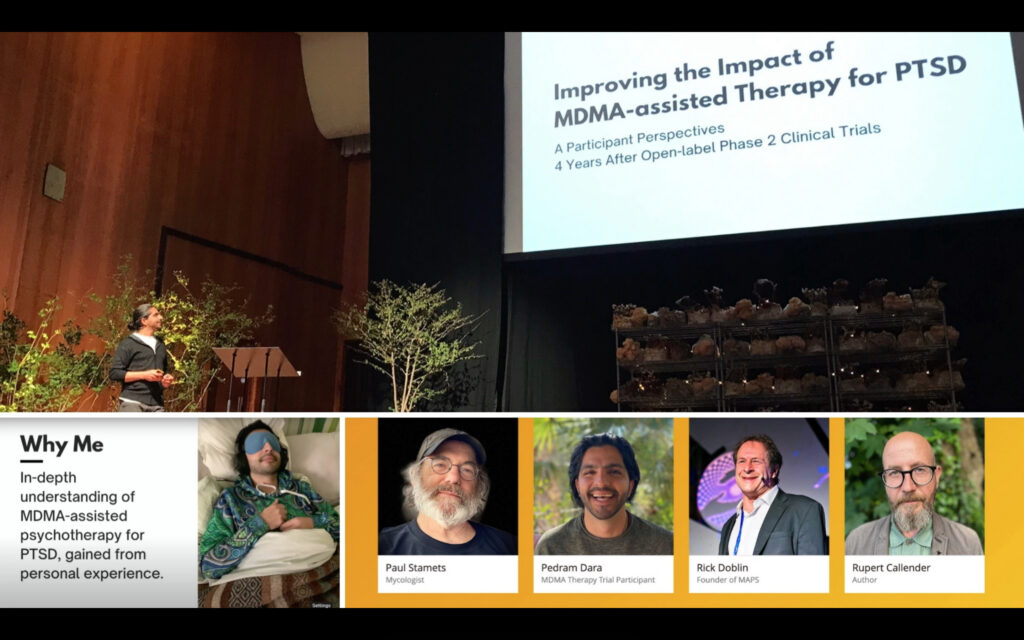
My personal story cannot represent everyone, and that is precisely the point. Research needs rigorous ways to learn from varied participant experiences, not just the successes or harms that make headlines.
Mental health research is stronger when people who actually use a product or service help shape its priorities and design. This is especially important in psychedelic care, where experiences can be highly subjective, with benefits and difficulties that can unfold long after the final visit, and adverse event reports alone cannot capture every vulnerability or failure in support.
Three Lessons from Seven Years After a Psychedelic Trial
What researchers measure is not the whole story. In my clinical trial, formal assessments tracked meaningful changes in PTSD symptoms. Those measures mattered for evaluating treatment outcomes, but they couldn’t capture what the changes meant for my relationships, work, identity, and daily life, or what helped the improvements stick. When I walked out of my final study appointment, the treatment protocol was ending just as my work of understanding and integrating the changes was beginning.
Experience can develop into expertise, but the process is not automatic. My trial experience gave me one perspective: my own. Years of reflection, education, peer support work, professional collaboration, and learning from researchers, clinicians, and people with very different outcomes helped me recognize patterns and develop informed judgment. This is one way lived experience can develop into expertise that helps institutions identify blind spots, interpret findings, and ask better questions. I envision a future in which lived experience expertise is recognized as a professional field, supported by clear competencies, ethical standards, and credible opportunities for working across disciplines. That is the future I am now working to build.
Lived experience should help shape research, not just decorate it. Involving patients, trial participants, and families should go beyond asking them to tell moving personal stories. Lived experience experts should help define research questions, review consent forms, select meaningful outcomes, identify hidden risks, interpret evidence, and improve care pathways. This involvement should include and fairly compensate people with diverse experiences, beginning before protocols are finalized and continuing well beyond the final dose.
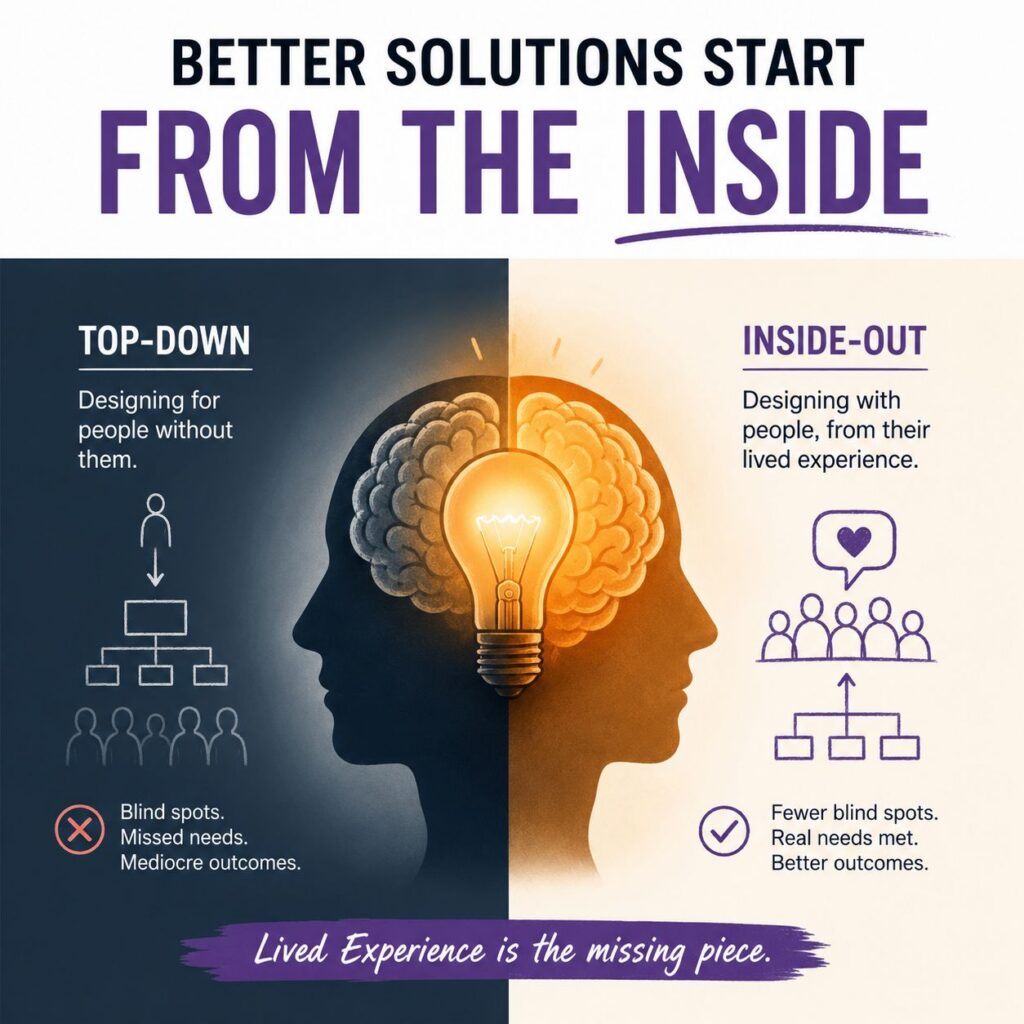
This approach drew me to the One Mind Lived Experience Initiative and led me to join its Community Advisory Network. One Mind involves people with lived experience as partners in refining research and development before key decisions are made. I look forward to bringing this perspective to startups in the One Mind Accelerator, helping founders involve lived experience early enough to enhance products and outcomes while identifying overlooked risks.
Before funding or approving a clinical trial, mental health innovation, or treatment model, we should ask: How did lived experience shape its design? Who helped decide which outcomes matter? Which participant perspectives are still missing?
More than seven years after my trial, I am still learning from what happened in that treatment room and everything that followed. Clinical science should not only study people’s experiences. It should give the people who live with the outcomes a meaningful role in shaping what comes next.