Why Is There More Integrity in the Product Design Process of My Donut Shop App Than My Mental Health Treatment?
By Jon Nelson and Amanda Geisinger
Jon is a widely respected lived experience advocate in the mental health domain and Amanda is an award-winning director of digital product design in the media industry. Both belong to One Mind’s Lived Experience Community. They combined forces to talk about how bizarre it is that mental health “innovation” is so far behind in adopting the modern professional standard of user experience research (and what One Mind is doing to change that).
Jon:
I’m a big analogy guy.
If Boeing was creating the first of its kind 797 jumbo jet, one of the very first groups they would consult while designing the plane would be the platinum frequent fliers. Boeing would codesign with the people ultimately consuming their service; they’d be the first people on board for the test flight. Their opinions about their experience with the company’s products would matter.
If that didn’t happen, the CEO would be fired.
Imagine investing a huge amount of money trying to create a product with no idea what your most valuable customers need or want when they fly. It would be a ludicrous and amateur hour level business approach.
Amanda:
Indeed! Jon’s right, but this isn’t just a metaphor. It’s an industry standard.
UX research (user experience research), which is not market research, product discovery, or asking your friend’s nephew what color he likes, is the discipline that systematically studies the behaviors, motivations, and needs of users relative to the specifics of your service with the aim of creating more valuable and effective solutions.
It is not a gimmick or luxury; it’s the minimum standard of practice in the modern professional world. You literally could not get a job in my field if you were unwilling to engage with processes that involve the people you’re ultimately serving.
These are formal methods of study with representative population samples and rigorously collected data and insights. When practiced with integrity, they are not casual, unstructured conversations that ask the opinions of a few random potential users.
The discipline actually consists of many established methodologies, of which codesign is only one. They span from qualitative approaches like heuristic investigations, usability studies, and ethnographic studies, to quantitative methods like A/B testing, time to task studies, and some forms of surveying.
These forms of design research have been standardized long enough now that they’ve been highly refined for efficiency and effectiveness. You get a ton of business critical information for very little time and cost. There is literally no pragmatic justification for not doing it.

Jon:
Yet, across the board in our industry, that’s not what we do.
Patients and their actual experience navigating their condition in the real world are treated as an afterthought 99% of the time.
In the rare case someone does truly do design with patient involvement, I hear the same comments from the big dogs every time: “I would have never thought about that before.”
That’s the point.
Lived Experience brings unique insights that only come from people who have done the hard work of figuring out how to survive their condition without formal training on it. They are the experts on how the rubber is going to hit the road. They are going to be the ones who sink or swim with your work, and if you don’t let them test the water, don’t be surprised when they don’t want to get in your pool.
I do very much respect the advanced education, massive effort, and huge investments that go into building an innovative startup or doing groundbreaking research. That said, technical knowledge and skill without lived experience is incomplete. You’re missing out on a ton of relevant knowledge.
Amanda:
I think you’re getting at a fundamental part of being excellent in any field: the ability to recognize the boundaries of your expertise.
As an educated and seasoned professional, I have highly refined technical expertise about how our brains visually and cognitively process information, the interplay of convention and usability in digital contexts, the micro-mechanics of typography, color, and layout, mental models related to systems thinking across touchpoints and interaction paradigms…and much more.
It’s very tempting, because of this expertise and because I use the products I create myself, to think I know what I need to know.
If you’ve ever seen a real user research study, you will chuckle with recognition at the hubris. It becomes very clear very quickly that professional expertise alone is insufficient.
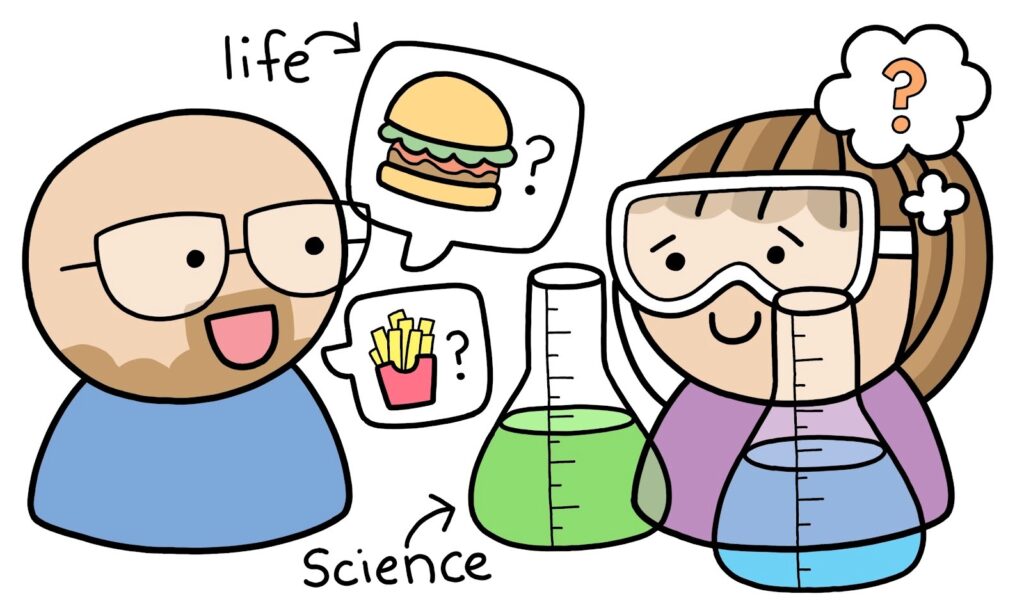
The experience, mindset, and perspectives of creator and user (scientist & patient) are inherently fundamentally different and well-researched practices have long been codified to bridge that gap.
But, for some reason, the mental health industry is resistant.
Jon:
Look at any important research, academic meeting, accelerator, conference, start up or established business. The patient is almost never in the room.
Far too often, people with lived experience are there as a token gesture: to check a box or to tell an “inspiring” story. They are frequently invited as an afterthought. This is too little, too late.
I’ve spoken about my lived experience at tons of conferences and the response I get after a talk is always the same: Many people come up to me and say, “That was fascinating. I have been in this space for 15 years and I have never met a patient before.”
In the academic world, I often hear, “That’s not how we do it.” Over and over, I meet academic experts who seem to show no interest in hearing from those of us who are experts through our lived experience. If you really want to advance your field, there is no logical argument for cutting out the expertise of the people who know the condition best. None.
Amanda:
It’s also pretty morally questionable. In addition to exposing shaky intellectual rigor, it bluntly displays a lack of compassion.
Think about the principles you operate on in your personal life—if you care about a person and you’re making something for them, you obviously want to understand what matters to them. And you respect them enough to let them be the authority on how they experience what you’ve made.

To not hold that perspective is, frankly, to dismiss a person’s full humanity.
Jon:
And if anyone knows about having their humanity dismissed, it’s people who struggle with mental illness.
People who have had their minds ravaged with awful disorders and diseases THEY didn’t ask for are shamed and stigmatized at every point in their health journey. Friends, family, and even doctors and professionals lack empathy in this area to a degree that is maddening.
But here’s the thing: that makes this population the most enthusiastic participants IN THE WORLD in a codesign process.
When you are made to feel awkward all the time by the ignorance of society, it is magical when you are asked for your expertise on your own experience and treated like a human being.
The people you’re designing for will run through walls to help make your product a success if you demonstrate that you care.
Amanda:
And we know that people in this space care—no one would invest so much if they didn’t.
Let’s talk about who is doing more than gambling that their impact will match their intent.
Jon:
Wellcome Trust, which is a foundation that funds discovery research, is the perfect example. They mandate integrating lived experience into all projects to qualify for their grants. They force it. (Think about how broken the field is that they need to explicitly enforce such a basic principle!)
MEXA focuses on the intersection of AI and mental health, and they are also doing it right. They believe in lived experience with conviction. I’ve gotten to speak at two of their events and you got to write that blog post; I’ve also provided lived experience expertise in their grant review process.
And One Mind is leading the charge here.
Amanda:
Yeah! It seems to me that One Mind’s Lived Experience Initiative brings together:
1. action to ensure the integrity of the process of solution creation and
2. advocacy for the dignity of people with lived experience.
They harness the power of science and lived experience to support the next generation of innovators who are ready to bring the treatment of mental illness into the modern era.
Honestly, coming from the commercial sector, I find it very strange that we live in a world where this aspect of what they do is even necessary, but I’m super grateful that they are here to do it and super impressed with their strategic, measured approach to making a real impact.
Jon:
For those who fully embrace working alongside and learning from people with lived experience, I applaud you. There is no doubt that integrating the expertise of people with lived experience into research and development will hugely benefit the field.
People with lived experience have the power to see what others cannot.
Try it out.
It’s powerful.