
U.S.-Japan Workplace Mental Health and Well-being Coalition

The U.S.-Japan Workplace Mental Health and Well-being Coalition brings together organizational leaders from the United States and Japan to advance workforce mental health. The coalition engages Japanese subsidiaries based in the United States, along with Japanese and global organizations operating in Japan, to strengthen mental health and well-being for employees, including Japanese expatriates and their families. Together, we are working toward a future where mental health and well-being are embedded in how organizations operate and define success.
Our work is grounded in science. We translate research into real-world best practices through global collaboration, led by:
Columbia University Mental Health + Work Design Lab brings scientific rigor and the capacity to collect data, conduct research, and translate science into workplace practice.
One Mind at Work is a global movement of organizational leaders working to translate science into measurable improvements in workforce mental health, powered by the Mental Health at Work Index.
Why This Matters
The average professional spends 90,000 hours at work over a lifetime, which makes the workplace one of the most powerful communities of influence on a person’s mental health. We believe supporting mental health and well-being is both a responsibility and an opportunity. Strengthening it rests on three commitments, what we call the 3 Ps Continuum: protecting employees from psychosocial risk, promoting capacity and reducing stigma, and providing high-quality, accessible care.
Organizations that take mental health and well-being seriously see the results: stronger talent attraction and retention, reduced costs from lost productivity, and healthier, more engaged, and higher-performing teams. For organizations managing international assignments, this work also strengthens the success and retention of expatriates and their families.
For Organizations Operating in Japan
In Japan, the need is clear. Nearly 7 in 10 employees report significant stress related to their work, most often driven by the volume of work, the pressure of responsibility, and the quality of work.¹ Yet more than 1 in 3 companies has yet to put any mental health measures in place, and adoption drops sharply among smaller companies, where limited resources and in-house expertise leave many without the support they need.¹ This need is especially urgent amid a shrinking workforce, intensifying competition for talent, and rising expectations around mental health and well-being from younger generations.
¹ Ministry of Health, Labor and Welfare, 2024 Survey on Industrial Safety and Health, published August 2025.
For Japanese Subsidiaries in the U.S.
For Japanese subsidiaries in the U.S., the challenge is twofold. Japanese corporations are the second-largest foreign employer in the United States, with majority-owned affiliates employing nearly one million Americans in 2022.² But inside these companies, two groups carry stress that often goes unseen:
Japanese expatriates face the challenges of adapting to a new country and workplace, including language barriers, limited access to appropriate and responsive care, and heightened isolation. Globally, 9 in 10 expatriates report a period of difficulty with their mental health while on assignment, and their families face their own adjustment alongside them. The business stakes are real: a family’s struggle to adjust is one of the leading causes of early repatriation, among the costliest outcomes in global mobility, where the average cost of a placement has risen 58% since 2017.³
Locally hired U.S. employees face a different adjustment, navigating a workplace shaped by Japanese business culture, where communication norms, feedback styles, and consensus-driven decisions may be unfamiliar and rarely explained. The challenges these two groups face look different, but the effects are often the same: burnout, lower engagement, and weaker collaboration across teams, all of which shape retention, assignment success, and productivity.
Supporting the mental health and well-being of these employees and the families who move with them is inseparable from the success of the organizations that depend on them.
² Japan External Trade Organization (JETRO), Japan’s U.S. Investment Dynamics 2025.
³ AXA Global Healthcare, World of Work: Global Mobility on the Move, 2025.
Our Goal
We believe lasting change happens when leaders work together. The U.S.-Japan Workplace Mental Health and Well-being Coalition brings together leaders across the United States and Japan to strengthen the health and well-being of the millions of workers and families who connect the two countries, and to help organizations perform at their best because of it. Our goal is to grow this community of leaders and support one another in making a difference that lasts.
Our Partners
We are grateful to collaborate with organizations that share our commitment to advancing mental health and well-being across the United States and Japan. These partnerships take many forms, including joining the 150+ global organizations in One Mind at Work’s corporate membership, project-based collaboration, and pro bono support. Some of our U.S.-Japan partners include:
Our Team

David W. Ballard, PsyD, MBA
Vice President, One Mind at Work

Kathleen M. Pike, PhD
CEO of One Mind

Haruka Kokaze
Chief of Staff and Senior Lead, Japan Mental Health Initiatives

Events and Engagements
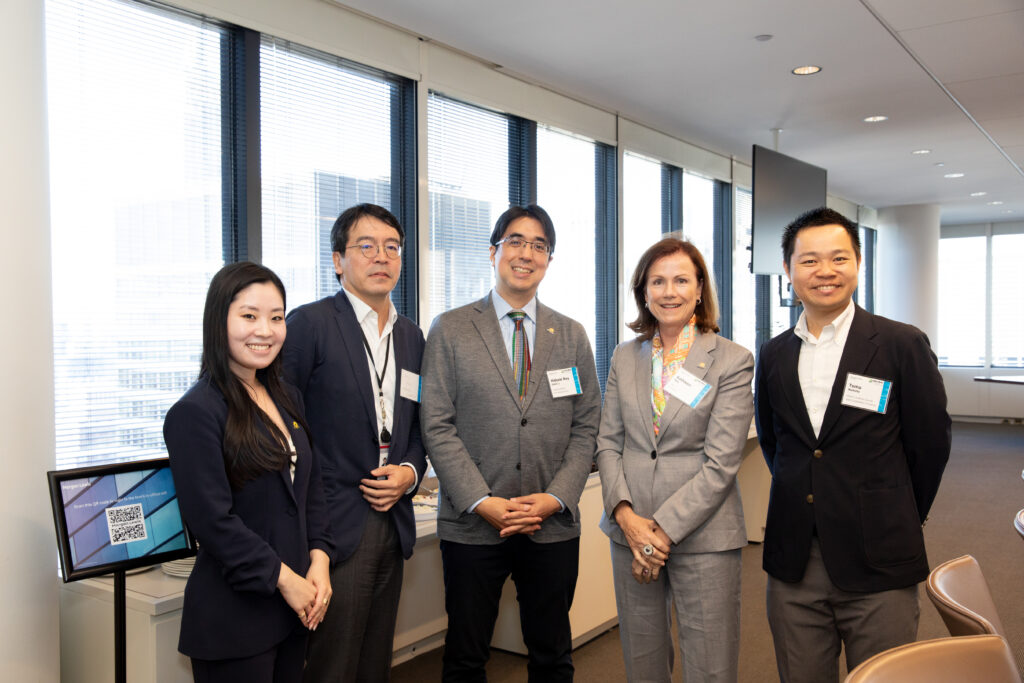
Across the United States and Japan, we convene, co-host, and speak at events with corporations, universities, community organizations, and chambers of commerce. Through keynotes, panels, symposia, and high-level roundtables, we explore timely and relevant topics tailored to each audience.
Want more information about the coalition and upcoming engagements?
Please contact Haruka Kokaze at haruka.kokaze@onemind.org